LAMDA for SEN learners · online and central London
LAMDA qualifications for SEN learners
For a lot of SEN children, written exams feel like a wall. LAMDA is a door.
I'm Sophie, a former Head of Drama, SENCO and experienced LAMDA examiner, and I coach children through LAMDA speech and communication exams designed around how they learn. It builds the things so many SEN learners find hardest, speaking clearly, making eye contact, taking turns, standing in front of others, and turns them into a real, graded qualification your child can be proud of.
Best of all, there isn't a single written paper in sight.
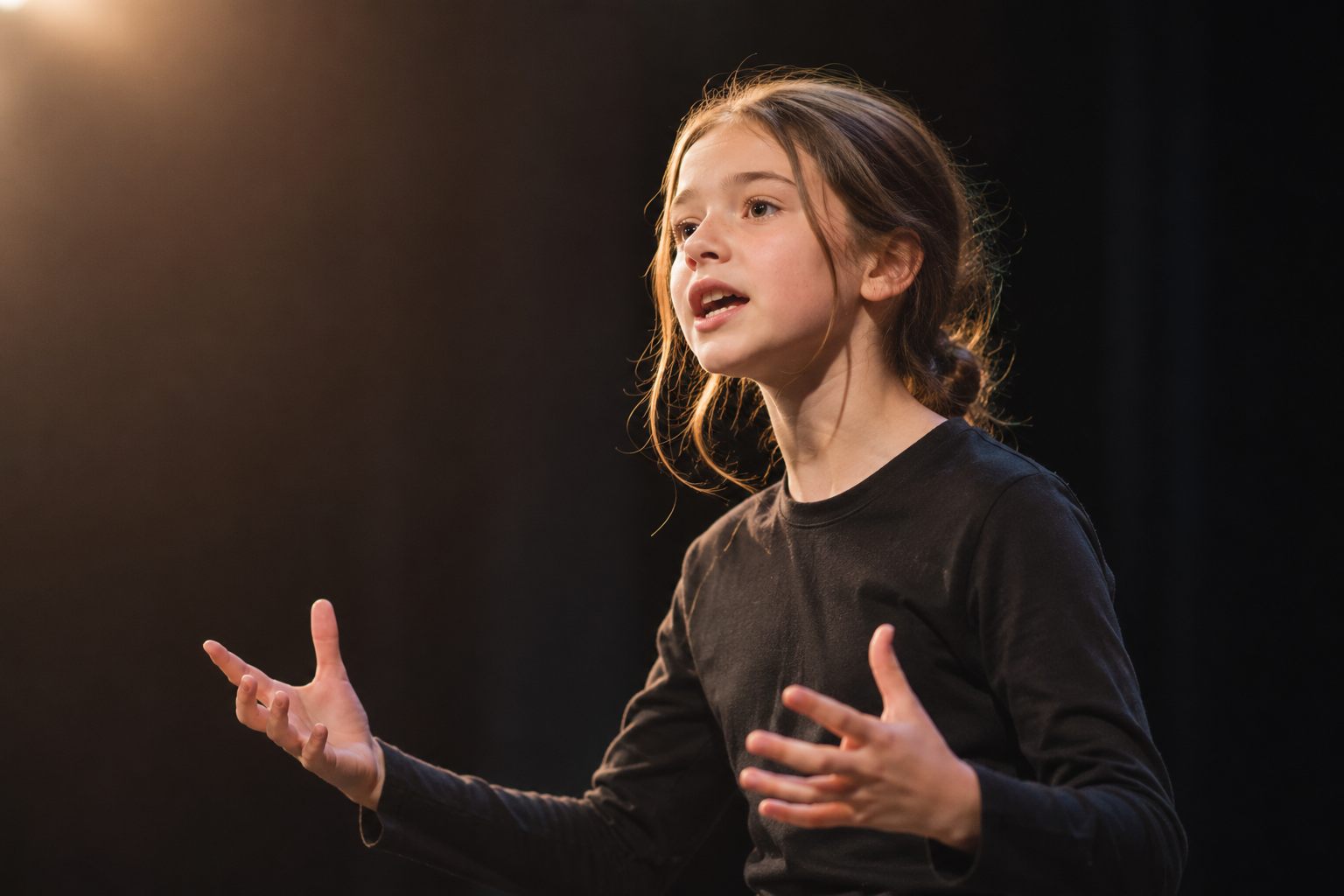
What LAMDA gives your child
Four things that show up long before any certificate does.
Clearer speech
Structured practice in how to breathe, project and pronounce, so your child is understood and feels heard.
Real confidence
Performing to one calm, encouraging adult, then to others, in tiny steps. Children who dreaded speaking up start to enjoy it.
Stronger communication
Eye contact, turn-taking, listening and expression: the everyday social skills classrooms rarely have time to teach directly.
Space to be creative
Storytelling, character and performance let children who struggle with the written word show how much they actually have to say.
Most exams reward what SEN children find hardest.LAMDA rewards the opposite.
That single difference is why it works so well for the children I teach.
Most written exams
What they ask a child to be good at
LAMDA
What it asks instead
I’ve seen it happen. And as a LAMDA examiner, I know exactly what success looks like and how to get your child there.
For a dyslexic child who has decided they’re “not academic”, a Distinction in a recognised exam can rewrite that story completely. For an anxious or autistic child, the structure and gentle repetition build a confidence that spills into everything else — from reading aloud in class to walking into a new room.
A vocational qualification, in plain English
LAMDA is a vocational qualification. That simply means it's practical: your child is graded on what they can do, out loud and in person, rather than on a written test. Skills are shown, not written down.
It's also internationally recognised, which means the certificate is respected by schools, colleges and universities around the world, not just in the UK. It goes on a CV, a school record or a university application as a genuine, external qualification, awarded by one of the world's leading drama academies.
It can even earn UCAS points
Here's the part most parents don't realise. Once a child reaches the higher grades, LAMDA counts towards university.
The Grade 6 to 8 exams (the Bronze, Silver and Gold Medal levels) are Level 3 qualifications that carry UCAS Tariff points, the same currency as A Levels. A Grade 8 can be worth up to 30 UCAS points, close to the value of a full A Level grade, and a child who takes two different routes to Grade 8 Distinction can earn even more.
So a journey that starts as confidence-building can end as points towards a university place, all through a subject that plays to your child's strengths.
How the lessons work
Nobody sits an exam until they want to, and nobody is pushed to perform before they’re ready.
- 1
Starting where they're comfortable
Often just talking and playing with words, with no pressure to perform. The first few weeks are about your child deciding this is a safe hour, not about getting anywhere.
- 2
Building towards their grade
Small, achievable steps at their pace, with every lesson planned around how they learn best. Pieces are rehearsed for months — nothing on exam day is a surprise.
- 3
The exam, when they're ready
And only then. They sit it with an external examiner and earn a certificate that’s theirs for life — and marked by someone other than me.
Why parents choose me for LAMDA
- Experienced LAMDA examiner
- 100% Distinction rate across my LAMDA candidates
- Former Head of Drama
- Lessons online and in central London
Common questions
The exam is the very last step, and we only take it when your child feels ready. Most of the work is quiet, one-to-one confidence-building. Many anxious children find the calm structure of LAMDA is exactly what helps them, and it sits naturally alongside predictable, low-demand autism-informed lessons.
Not at all. The vast majority of my LAMDA pupils have no interest in acting as a career. They do it for the confidence, the communication skills and the qualification, which help in every subject and every part of life.
We'll work that out together on a free call. Younger or less confident children usually begin at an early grade to build success quickly, and we progress towards the UCAS-bearing higher grades over time if that's the goal.
Give your child a qualification that fits them
LAMDA is the rare qualification that rewards a child for exactly who they are: expressive, imaginative and full of things to say. Let's talk about how it could help your child find their voice, and their confidence, along the way.
I teach every lesson myself, so I take a limited number of students at a time. If you’d like a place this term, it’s worth getting in touch now.